reading
What I’m reading, and what I’ve read — with whatever I marked along the way.
Now reading
The Road
The Things We Never Say
On Earth We're Briefly Gorgeous
Show 1 highlightHide
On Earth We're Briefly Gorgeous
Show 1 highlightHide
1 highlight
We abandoned the oxtail, the bún bò huế. You grabbed a loaf of Wonder Bread and a jar of mayonnaise. None of us spoke as we checked out, our words suddenly wrong everywhere, even in our mouths.
loc. 44118
Read

The Book of Delights
Show notes and 14 highlightsHide
The Book of Delights
Show notes and 14 highlightsHideReflections
I really enjoyed this but for whatever reason took a very long time to finish this. Love the writing, the observations, etc. My friend Lindsey recommended I read this in part because of its proximity to my autobiodiscography project.
14 highlights
It didn’t take me long to learn that the discipline or practice of writing these essays occasioned a kind of delight radar. Or maybe it was more like the development of a delight muscle. Something that implies that the more you study delight, the more delight there is to study. A month or two into this project delights were calling to me: Write about me! Write about me!
loc. 163
And if there’s some chance to wear some bright and clanging colors, believe me. Some bit of healing for my old man, surely, who would warn us against wearing red, lest we succumb to some stereotype I barely even know. (A delight that we can heal our loved ones, even the dead ones.) Oh broken. Oh beautiful.
loc. 172
Susan Sontag said somewhere something like any technology that slows us down in our writing rather than speeding us up is the one we ought to use.
loc. 405
“What if we joined our wildernesses together?” Sit with that for a minute. That the body, the life, might carry a wilderness, an unexplored territory, and that yours and mine might somewhere, somehow, meet. Might, even, join.
loc. 549
It astonishes me sometimes—no, often—how every person I get to know—everyone, regardless of everything, by which I mean everything—lives with some profound personal sorrow. Brother addicted. Mother murdered. Dad died in surgery. Rejected by their family. Cancer came back. Evicted. Fetus not okay. Everyone, regardless, always, of everything. Not to mention the existential sorrow we all might be afflicted with, which is that we, and what we love, will soon be annihilated. Which sounds more dramatic than it might. Let me just say dead. Is this, sorrow, of which our impending being no more might be the foundation, the great wilderness? Is sorrow the true wild? And if it is—and if we join them—your wild to mine—what’s that? For joining, too, is a kind of annihilation. What if we joined our sorrows, I’m saying. I’m saying: What if that is joy?
loc. 552
I suppose I could spend time theorizing how it is that people are not bad to each other, but that’s really not the point. The point is that in almost every instance of our lives, our social lives, we are, if we pay attention, in the midst of an almost constant, if subtle, caretaking. Holding open doors. Offering elbows at crosswalks. Letting someone else go first. Helping with the heavy bags. Reaching what’s too high, or what’s been dropped. Pulling someone back to their feet. Stopping at the car wreck, at the struck dog. The alternating merge, also known as the zipper. This caretaking is our default mode and it’s always a lie that convinces us to act or believe otherwise. Always.
loc. 1147
Anyhow, the booch had just the right sweetness and fizz—I could feel my tummy’s trillion flora fornicating as it went down.
loc. 1181
I’ve been told there is a term for this among behavioral psychologists, which foregrounds the behavior as opposed to what intrigues me, which is the fact of our bodies’ ubiquitous porosities, how so often, and mostly unbeknownst, our bodies are the bodies of others. (Mar.
loc. 1290
I wonder if this impulse to share, the urge to elbow your neighbor, who maybe was not even your neighbor until the bird flew between you up into the pipes and rafters you did not notice until you followed the bird there, is also among the qualities of delight? And further, I wonder if this impulse suggests—and this is just a hypothesis, though I suspect there is enough evidence to make it a theorem—that our delight grows as we share it.
loc. 1395
It is a sweet correction this computer keeps making, turning pawpaw into papaw, which means, for those of you not from this neck of the woods, papa or grandpa, which a pawpaw grove can feel like, especially standing inside of it midday, when the light limns the big leaves like stained glass and suddenly you’re inside something ancient and protective.
loc. 1751
The Webster’s definition of loiter reads thus: “to stand or wait around idly without apparent purpose,” and “to travel indolently with frequent pauses.” Among the synonyms for this behavior are linger, loaf, laze, lounge, lollygag, dawdle, amble, saunter, meander, putter, dillydally, and mosey. Any one of these words, in the wrong frame of mind, might be considered critique or, nouned, epithet (“Lollygagger!” or “Loafer!”). Indeed, lollygag was one of the words my mom would use to cajole us while jingling her keys when she was waiting on us, which, judging from the visceral response I had while writing that memory, must’ve been not quite infrequent. All of these words to me imply having a nice day. They imply having the best day. They also imply being unproductive. Which leads to being, even if only temporarily, nonconsumptive, and this is a crime in America, and more explicitly criminal depending upon any number of quickly apprehended visual cues.
loc. 1785
Which points to another of the synonyms for loitering, which I almost wrote as delight: taking one’s time. For while the previous list of synonyms allude to time, taking one’s time makes it kind of plain, for the crime of loitering, the idea of it, is about ownership of one’s own time, which must be, sometimes, wrested from the assumed owners of it, who are not you, back to the rightful, who is.
loc. 1807
All of these examples make clear that touched often also means exuberant or enthusiastic, both of which qualities can provoke in us, when we are feeling small and hurtable, something like embarrassment, which again maybe points to the terror at our own lurking touchedness. When I watched the child doing his wonky, unselfconscious moonwalk, I had a feeling that I might have then identified as embarrassment, aware of this kid’s obliviousness, his immersion—his delight. But I am coming to identify that feeling of embarrassment as something akin to tenderness, because in witnessing someone’s being touched, we are also witnessing someone’s being moved, the absence of which in ourselves is a sorrow, and a sacrifice. And witnessing the absence of movement in ourselves by witnessing its abundance in another, moonwalking toward the half and half, or ringing his bell on Cass Street, can hurt. Until it becomes, if we are lucky, an opening.
loc. 1827
Now that I think of it, I stopped harvesting pee tea a few years back when I was living for the year with Stephanie and her family in New Jersey. We were sharing a community garden plot for which I had been collecting my pee, a fact I bet the other gardeners would not have loved. All the same, I was diligent, and one day after a solo basketball workout on the crummy courts behind the Milford public library I harvested into an empty Gatorade bottle, filling it up all the way with the warm, golden elixir, capping it tight, and putting it in the cupholder before going to pick up Stephanie’s daughter, Georgia, from softball practice or camp or something. We were chatting and driving down Rt. 29 when I watched her spot the bottle, grab it, twist it open, and, moving it toward her mouth, ask if she could have a sip. Friends, you may know that fully one third of being an adult man in a girl’s life is not to be perceived as, not to be, a pervert, both of which boundaries I was very close to unintentionally crossing simply by virtue of this child’s cavalier disregard for my boundaries, which is my way of saying I am the one who needs your sympathy right now.
loc. 1888

The Dog Stars
Show notesHide
The Dog Stars
Show notesHideReflections
Kim and I listened to this audiobook as we drove across New England. It was…fine! The writing style, which supposes that the survivalist male protagonist will have done away with complete sentences in his inner dialogue, got a little tiresome: Doesn’t need them. No point when every day you fight for your life. Can’t afford luxuries like subjects.

The Courage to Be Disliked: How to Free Yourself, Change Your Life and Achieve Real Happiness

Transcription
Show notes and 3 highlightsHide
Transcription
Show notes and 3 highlightsHideReflections
This was really sparse; after I finished it I read the author had removed large chunks, which feels right. Still managed to be very compelling; found myself thinking a lot about it after finishing. The scene where Max talks to his father on his (presumed) COVID death bed was remarkably compelling, and then more so when (spoilers!) he doesn’t die. Really liked this.
3 highlights
“I could hear him listening; I could somehow sense the shape of his attention. I can’t do this, I was thinking, maybe I even said that out loud, I can’t do this, but then I just was doing it, a rush of German and tears, no longer concerned about being overheard, things I never would have said if his image or his body were before me, or if anyone could see my face; I could only say them as a disembodied voice: ‘I know you did your best, I know you love me, I know you loved her, I do not blame you, no one is to blame, she needed more help, maybe no amount of help would have helped, there are forces much bigger than us, but you left me alone, way too alone, there are many things that should have been different, I should never have been sent to boarding school, I know you didn’t know what to do, I know it wasn’t that you didn’t care, I want you to be at peace, we will honor you, Emmie will carry you with her, she loves you so much, the love goes on forever in both ways, we will take care of all the art and she will have it in time, I know you want her to have the Höch montages, I will manage it all, your things and your work and your stories and your voice, I will always hear your voice, I’m so glad you saw Emmie here, she is doing great now, she is eating plenty of healthy food, I’m sorry I was such a child on this last trip, you were right to be concerned, she was struggling, but now she is OK, it is good that you were concerned, it was love, you are a good person, let’s forgive each other, I forgive you and I love you, you can go, you can be at peace now, goodbye.’
loc. 155152
(It’s silly, but I felt connected to her because I’d said those things on her personal phone, not a hospital platform—it made it a different kind of contact, that medium. So strange to think I’d said what I’d said on a device that she’d take home, that she would touch with her hands and face, that she would charge beside her bed.) I felt that my dad was already dead, that he wasn’t suffering, and that his death, instead of severing our connection, had opened this channel between
loc. 157716
Childhood memories I normally would have tried to block now broke over me as we walked, but gently, warmly: my dad cracking my mom and me up with his Charlie Chaplin imitation, how long since I’d recalled that? The tears on his face at the Cueva de las Manos—that trip we took after my college graduation. I knew plenty of anger and pain would come back, I knew I might get hit at any moment with real grief, I knew the terror of the virus and everything else in the unraveling world was going to return, but I felt, at that moment, compassion, peace.
loc. 158340

Piranesi
Show notesHide
Piranesi
Show notesHideReflections
I didn’t see the brilliance in this a lot of others seem to find; I thought the pacing was just kind of boring. I accept this might just be because I was in a reading funk at the time. Maybe everything was going to feel like a slog.

What Happened To You?: Conversations on Trauma, Resilience, and Healing
Show notesHide
What Happened To You?: Conversations on Trauma, Resilience, and Healing
Show notesHideReflections
I think I have read this book before in the last couple years, recommended by my therapist. Found it interesting and enlightning the second time as well. Maybe the least annoying I’ve ever found Oprah.

Oh William!
Show notes and 5 highlightsHide
Oh William!
Show notes and 5 highlightsHideReflections
I had a harder time getting into the beginning of this book than the other in the Amgash series, but I think that might’ve been because I was a bit distracted while reading it. It took me longer than two weeks, and because [Amazon closed](https://goodereader.com/blog/kindle/airplane-mode-on-the-kindle-wont-extend-libby-e-books-anymore) the airplane mode loophole I used to be able to use to keep books longer than their due date while I was reading it, I had to switch to the audiobook about 2/3 of the way through.
But wow this book finishes so strong, I was softly saying oh and nodding my head in agreement in the last 10 minutes, none of which shows up in my highlights because I was listening to the audiobook. None of us know anyone or maybe anything, except a tiny bit, and this reminded me so much of all of Olive Kitteridge as well.
5 highlights
At times in our marriage I loathed him. I saw, with a kind of dull disc of dread in my chest, that with his pleasant distance, his mild expressions, he was unavailable. But worse. Because beneath his height of pleasantness there lurked a juvenile crabbiness, a scowl that flickered across his soul, a pudgy little boy with his lower lip thrust forward who blamed this person and that person—he blamed me, I felt this often; he was blaming me for something that had nothing to do with our present lives, and he blamed me even as he called me “Sweetheart,” making my coffee—back then he never drank coffee but he made me a cup each morning—setting it down before me martyr-like. Keep the stupid coffee, I wanted to cry out sometimes, I’ll make my own coffee. But I took it from him, touching his hand. “Thanks, sweetheart,” I would say, and we would begin another day.
loc. 288
Catherine always smelled good; there was a certain perfume and this was her scent. It was because of this that eventually I began to wear a certain perfume—though not hers—and have my own scent. It seemed I could never buy enough body lotion of this scent. That lovely woman psychiatrist said one day with a shrug, “It’s because you think you stink.” She was right. My sister and my brother and I were told on the playground almost every day at school by the other children, while they ran off with their noses pinched, “Your family stinks.”
loc. 485
A tulip stem inside me snapped. This is what I felt. It has stayed snapped, it never grew back. — I began to write more truthfully after that.
loc. 826
Mommy, I cried inside myself, Mommy, I am so frightened! And the nice mother I have made up over the years answered: Yes, I know.
loc. 1197
As we drove I suddenly had a visceral memory of what a hideous thing marriage was for me at times those years with William: a familiarity so dense it filled up the room, your throat almost clogged with knowledge of the other so that it seemed to practically press into your nostrils—the odor of the other’s thoughts, the self-consciousness of every spoken word, the slight flicker of an eyebrow slightly raised, the barely perceptible tilting of the chin; no one but the other would know what it meant; but you could not be free living like that, not ever. Intimacy became a ghastly thing.
loc. 1520

World Within a Song: Music That Changed My Life and Life That Changed My Music
Show notesHide
World Within a Song: Music That Changed My Life and Life That Changed My Music
Show notesHideReflections
Was interesting to read how Tweedy approached this, which is a project sort of similar in conception to what I'm doing with the autobiodiscography. He is a fantastic storyteller, and in this book the little memory sections--did he call them reveries?--between the entries about the songs were the best; my favorite by far was the story about he and his dad messing with his neighbors and the boy with his ham radio.

A Short Stay in Hell
Show notes and 3 highlightsHide
A Short Stay in Hell
Show notes and 3 highlightsHideReflections
Fascinating little novella. Had me thinking about religion and faith and the afterlife, the way that we think of our choosing a religion and how staying devoted to it is a reflection of something moral and good within us, or that leaving a religion is a failure. Does thinking that we choose our religion and whether we stay with it say more about us or our religions?
3 highlights
Did I know her only for so short a time? Strange, how a moment of existence can cut so deeply into our being that while ages pass unnoticed, a brief love can structure and define the very topology of our consciousness ever after.
loc. 32
All my life I’d been raised to believe this kind of thing was wrong. All my life I had lived with a strong sense of morality. How do you give it up? How do you do things you thought you’d never do? Where do all the things you believed go, when all the supporting structure is found to be a myth? How do you know how or on what to take a moral stand, how do you behave when it turns out there are no cosmic rules, no categorical imperatives? It was difficult. So tricky to untangle. I still remember the deep sense of loss.
loc. 565
The days passed in a dream. I pictured our reunion again and again, played it out in my mind over and over until I’d almost worn a groove in my thoughts, so deep that it seemed the only thing I could think of was our reunion. Anticipation is a gift. Perhaps there is none greater. Anticipation is born of hope. Indeed it is hope’s finest expression. In hope’s loss, however, is the greatest despair.
loc. 1077

Amusing Ourselves to Death: Public Discourse in the Age of Show Business
Show notesHide
Amusing Ourselves to Death: Public Discourse in the Age of Show Business
Show notesHideReflections
A disturbing book. At several points he compares his present unfavorably to some point in the past when people had better habits of mind, and even though it's only 40 years later it's pretty rough to compare his present to ours. At one point he talks about how "our current president" would be unlikely to be able to deliver a particular complex argument (I think he was comparing him to Abraham Lincoln), saying he (Reagan) was a former actor and more concerned with the visuals of television etc. than rhetoric. Buddy, get a load of our current president.
I can see how it might be thought of as tiresome but I think it does a good job of not being longer than it needs to be, which is obviously rare. (Also, I mean...Mr. Postman would probably note that people used to be able to read long books.)
I thought as I listened to the book about when there is new technology and a group of people will say a version of "well people said the same thing about the invention of [a previous technology]". That is such a frustrating and tired argument, mostly because it is the kind of argument that is true until it isn't any more. Things can be similar but also have differences that matter, differences that should change our understanding and calculus about the risk or benefits or dangers something offers. This feels especially important in 2026 (and maybe, by now, also obvious), but Plato being worried that printed language would cause the downfall of society might be effectively invoked when someone offers a similar argument about the printing press, but obviously people being wrong about those advances didn't mean people worried about the brain-warping power of algorithmic social media were wrong, even if at the time almost everyone brushed them off as one more Luddite.

Anything Is Possible
Show notes and 20 highlightsHide
Anything Is Possible
Show notes and 20 highlightsHideReflections
Reading Strout I'm always wondering if very specific interior parts are seen specifically by the author--do we share some similarity of being, does she know, has she observed, people who are similar to me?--or are these interior, private spaces actually common interior places to all of us?
(This book is excellent, I love this author and everything she writes.)
20 highlights
After a few moments, Tommy glanced in his rearview mirror, and what he saw was Pete Barton hitting the sign with the sledgehammer. Something about the way he hit it—the force—made Tommy watch carefully as he drove down the road. He saw the boy—the man—hit the sign again and again with what seemed to be increasing force, and as Tommy’s car dipped down just slightly, losing sight for a moment, he thought: Wait. And when his car came back up he looked again in the rearview mirror and he saw again this boy-man hitting that sign with rage, with a ferocity that astonished Tommy, it was astonishing, the rage with which that man was hitting that sign. It seemed indecent to Tommy that he was witnessing it, for it felt as private in its anguish as what the boy’s father had been doing out behind Tommy’s barns that day. And then as Tommy drove he realized: Oh, it was the mother. It was the mother. She must have been the really dangerous one.
loc. 368
“I’m an old man,” said Tommy. “I think if we’re going to have talks like this one I should stop by more often. How about I see you two Saturdays from now?” Tommy was surprised to see Pete’s hands become fists that he banged down on his knees. “No,” Pete said. “No. You don’t have to. No.” “I want to,” said Tommy, and he thought—then he knew—as he said this that it was not true. But did that matter? It didn’t matter. “I don’t need someone coming to see me out of obligation.” Pete said this quietly. The pain deep in Tommy’s chest increased. “I don’t blame you for that,” he said. They sat together in the car, which was now warm, and the smell, to Tommy, was palpable. In a moment Pete spoke again, “Well, I guess I thought you were coming here to torture me, and I was wrong about that. So I guess maybe I’d be wrong to think you were just obliging me.” “I think you’d be wrong,” said Tommy. But he was aware, again, that this was not true. The truth was that he did not really want to visit this poor boy-man seated next to him ever again. They sat in silence for a few moments more; then Pete turned to Tommy, gave him a nod. “All right, I’ll see you then,” said Pete, getting out of the car. “Thanks, Tommy,” he said, and Tommy said, “Thank you.”
loc. 417
And then Tommy understood: that what he had kept from her their whole lives was, in fact, easily acceptable to her, and what he would keep from her now—his doubt (his sudden belief that God had never come to him)—was a new secret replacing the first. He took his hand from hers. “You might be right,” he said. A paltry thing he added, but it was true: He said, “I love you, Shirley.” And then he looked at the ceiling; he could not look at her for a moment or two.
loc. 452
Sebastian had become interested; she saw his keenness as he listened to this story. In a few minutes he asked some questions, for example, had Lucy seemed different from her brother and sister? Patty said she didn’t know; she hadn’t known any of them, really. But—here was something odd: Lucy’s parents had been asked to the wedding of Patty’s oldest sister, Linda, and Patty had never figured that out, she couldn’t imagine Lucy’s father had even owned a suit, why would they have been at her sister’s wedding? Sebastian said, Maybe your mother didn’t have anyone else who would talk to her at that point, and Patty realized he was exactly right. Patty’s face had turned bright red as she saw the truth to this. Sweetheart, said Sebastian, and reached for her hand. A few months later Sebastian was gone. Having met in their late thirties, they’d had only eight years together. No children. Patty had never known a better man.
loc. 477
A few years ago Angelina’s mother, at the age of seventy-four, had left town—had left her husband—to marry someone in Italy almost twenty years younger than she was. Patty had tremendous sympathy for Angelina regarding this. But she wanted to say right now: Listen to this! Lucy Barton’s mother was awful to her, and her father—oh dear God, her father…But Lucy loved them, she loved her mother, and her mother loved her! We’re all just a mess, Angelina, trying as hard as we can, we love imperfectly, Angelina, but it’s okay.
loc. 717
Patty was aware of how much Angelina wanted to talk about herself, and yet this didn’t disturb Patty, she merely noticed it. And she understood. Everyone, she understood, was mainly and mostly interested in themselves. Except Sibby had been interested in her, and she had been terribly interested in him. This was the skin that protected you from the world—this loving of another person you shared your life with.
loc. 726
Now, as Patty drove into her driveway and saw the lights she’d left on, she realized that Lucy Barton’s book had understood her. That was it—the book had understood her. There remained that sweetness of a yellow-colored candy in her mouth. Lucy Barton had her own shame; oh boy did she have her own shame. And she had risen right straight out of it. “Huh,” said Patty, as she turned the car engine off. She sat in the car for a few moments before she finally got out and went inside.
loc. 757
He had seen how serious this was for her, planting her first flowers at the age of eighteen, with him, her first love— He had been moved by her eagerness, bundled up as she was in her long woolen coat; they dug the holes, put the bulbs in. “Bye, bye, good luck,” she had said to one bulb. The very stuff that would make him roll his eyes now—her utter foolishness, the useless, nauseating softness that lay at the center of her—had thrilled him quietly that day with a rush of love and protectiveness as the autumn smell of earth filled him, kneeling there with the trowel.
loc. 1171
moved back and forth inside him. He was suddenly as homesick as a child sent to stay with relatives: when the furniture seemed large and dark and strange, and the smell peculiar, each detail assaultive with a differentness that was almost unbearable. I want to go home, he thought. And the desire seemed to squeeze the breath from him, because it was not his home in Carlisle, Illinois, where he lived with Marilyn that he wanted to go home to, his grandchildren right down the street. And it was not his childhood home either, which was in Carlisle as well. Nor was it their first home as newlyweds outside of Madison. He did not know what home it was he longed for, but it seemed to him as he aged that his homesickness would increase, and because he could not tolerate the Marilyn he now lived with—a woman who nevertheless filled his estranged, expatriated heart with pity—he did not know what he would do, and the minnow darting through the stream of his anxiety landed briefly on his current Carlisle home with his grandchildren down the street, swam to the golf course where he did still sometimes enjoy the expanse of green before him, swam to the woman who might or might not show up here with her head of dark, glossy hair—and not one place seemed stable.
loc. 1179
the previous hiatus, which had now returned to him, that spaciousness of calm: Long ago he’d assigned a private name to it. The hit-thumb theory. On his grandfather’s roof as a child one summer, hammering tiles down hard, he’d discovered that if you hammered your thumb by mistake, there was a split second when you thought: Hey, this isn’t so bad, considering how hard I was hit….And then—after that moment of false, bewildered, and grateful relief—came the crash and crush of real pain. In the war this had happened so often, in so many forms, he’d sometimes thought he was brilliant—the analogy was that apt. In the war he had learned many things, and not one of them had he heard any psychologist mention during any of the meetings that Marilyn now thought he was attending.
loc. 1245
He had not, at the time of its construction, been interested in the Memorial. No, Charlie Macauley had not been interested a bit. And yet one day—after many nights of being bombarded repeatedly with the memories of Khe Sanh—he took a bus by himself all the way to Washington, and what a thing he found there. He had wept without sound or self-consciousness, walking along the dark granite wall, seeing names he recalled, touching them with his coarsened fingertips. And people nearby—he could sense them, tourists most likely—left him alone with respect; this he could feel, that they were respecting him as he wept! He had never thought such a thing possible. Back in Carlisle he told Marilyn, “It was good I went.” She surprised him by saying only “I’m glad, Charlie.” And then later that night she said, “Listen. You go back whenever you need to, I mean it. We have enough money for you to make that trip any time you need it.” People could surprise you. Not just their kindness, but also their sudden ability to express things the right way.
loc. 1256
And because he was Charlie, who years ago had fouled himself profoundly, because he was Charlie and not someone else, he could not say to his son: You are decent and strong, and none of this has anything to do with me; but you came through it, that childhood that wasn’t all roses, and I’m proud of you, I’m amazed by you. Charlie could not even say a watered-down version of whatever that feeling would be. He could not even clap his son on the shoulder in greeting, or when saying goodbye.
loc. 1272
After the night at Khe Sanh they’d brought in another chaplain, a phony. Theatrical. “Jesus is your friend,” the new chaplain would say, with silly pontification, as though he were dispensing Jesus Pills that only he was in charge of.
loc. 1309
“Do you mind if I join you once I’m done in the kitchen?” He said he wouldn’t mind. “I don’t care what we watch,” she added. In a distant way he understood that she had her own echoes of pain—at their age, he supposed, who did not? Then he supposed that many did not. It occurred to him often that many did not have echoes of pain from the silent noises he carried in his head.
loc. 1409
You never get used to pain, no matter what anyone says about it. But now, for the first time, it occurred to him—could it really be the first time this had occurred to him?—that there was something far more frightening: people who no longer felt pain at all. He had seen it in other men—the blankness behind the eyes, the lack that then defined them. So Charlie, a tiny bit, sat up straighter, and he stared pretty hard at that television set. He waited, hope like a crocus bulb inside him now. He waited and he hoped, he practically prayed. O sweet Jesus, let it come. Dear God, please, could you? Could you please let it come?
loc. 1419
But Paolo—she had told Paolo of her fantastical life with Elvis, and Paolo had watched her, one eye partially closed, then he opened his arms and hugged her. The freedom. Oh God, the freedom of being loved—!
loc. 1559
She had never liked being angry; she didn’t know what to do with it.
loc. 1665
They had grown up on shame; it was the nutrient of their soil. Yet, oddly, it was her father she felt she understood the best. And for a moment Annie wondered at this, that her brother and sister, good, responsible, decent, fair-minded, had never known the passion that caused a person to risk everything they had, everything they held dear heedlessly put in danger—simply to be near the white dazzle of the sun that somehow for those moments seemed to leave the earth behind.
loc. 2725
forgot but then lived with anyway—like phantom limbs, he supposed. Because he could not honestly say anymore what he’d felt when he’d found food in a dumpster. Gladness, perhaps, when he discovered large parts of a steak that could be scraped clean. It gets terribly practical, he told his wife many years later. Then came the moment of her ill-concealed horror: Weren’t you ashamed? And the answer—the understanding—so immediate that it was coming to him even as she spoke: Well, then you’ve never been hungry, Elaine. He did not say it. But he did become ashamed, once his wife asked him that question. Then he surely became ashamed. She requested that he never tell their children how their father had been so poor as to eat from garbage cans.
loc. 2943
When word came that Keith had died of cancer, Abel was astonished. That astonishment had to do with death, with the wiping out of a person, with the puzzlement that the man was simply gone. The simplicity of the goneness was something Abel was familiar with; he was not a young man, he had known the death of others, starting with the goneness of his own father. But what followed this astonishment was a searing sense of shame, as though Abel had done something unsavory all those years by having Keith build his clothes. He found himself murmuring the words out loud, when he was in his car, or alone in his office, or getting dressed in the morning, “I’m sorry. God, I’m so sorry.” Even while he voted as a conservative, even while he took his annual bonus from the board, even while he ate in the best restaurants Chicago offered, and even while most of him thought what he had thought for years, I will not apologize for being rich, he did apologize, but to whom precisely he did not know. Waves of shame would suddenly pour over him, the way his wife had endured hot flashes for years, her face instantly bright red, rivulets of perspiration forming on the sides of her face. She could not be jovial about these incidents, the way he saw some women at the office were. But he felt he understood better now, the uncontrolled assault she must have felt, just as he felt the uncontrolled assault of his shame, which, he was perfectly aware, had no basis in anything real. Keith had had a job. He had done his job well. He had been paid well. (He had not really been paid that well.)
loc. 2996

My Name Is Lucy Barton
Show notes and 22 highlightsHide
My Name Is Lucy Barton
Show notes and 22 highlightsHideReflections
I was delighted by this short book. The intimacy of the scene, the humble premise both small in scale but grand in ambition: each character who walks onto the stage has only a brief moment, but you sense, even in this book, that you are being introduced to each of them to revisit them, that though they speak no or few lines while on the page, they carry a rich history worth visiting.
But this book isn't only valuable as a prequel or introduction to a series, it's such wonderful writing, and the richness of this one relationship--a mother and daughter--so vivid, so detailed and considered.
22 highlights
But there are times, too—unexpected—when walking down a sunny sidewalk, or watching the top of a tree bend in the wind, or seeing a November sky close down over the East River, I am suddenly filled with the knowledge of darkness so deep that a sound might escape from my mouth, and I will step into the nearest clothing store and talk with a stranger about the shape of sweaters newly arrived. This must be the way most of us maneuver through the world, half knowing, half not, visited by memories that can’t possibly be true. But when I see others walking with confidence down the sidewalk, as though they are free completely from terror, I realize I don’t know how others are. So much of life seems speculation.
loc. 201
He asked what we ate when I was growing up. I did not say, “Mostly molasses on bread.” I did say, “We had baked beans a lot.” And he said, “What did you do after that, all hang around and fart?” Then I understood I would never marry him. It’s funny how one thing can make you realize something like that. One can be ready to give up the children one always wanted, one can be ready to withstand remarks about one’s past, or one’s clothes, but then—a tiny remark and the soul deflates and says: Oh.
loc. 322
It was not until many years later, long after, that I learned from my brother how my father, in a German town, had come upon two young men who startled him, and my father had shot them in the back, he did not think they were soldiers, they were not dressed like soldiers, but he had shot them, and when he kicked one over he saw how young he was. My brother told me that William had seemed to my father an older version of this person, a young man who had come back to taunt him, to take away his daughter. My father had murdered two German boys, and as my father lay dying he told my brother that not a day had gone by when he did not think of them, and feel that he should have taken his own life in exchange.
loc. 363
Maybe it was the darkness with only the pale crack of light that came through the door, the constellation of the magnificent Chrysler Building right beyond us, that allowed us to speak in ways we never had. “People,” I said. “People,” my mother said. I was so happy. Oh, I was happy speaking with my mother this way!
loc. 397
The apartment was clean and spare: A stalk of purple iris was in a glass vase against a white wall, and there was art on the walls that made me understand then how far apart he and I were. I say this because I didn’t understand the art; they were dark and oblong pieces, almost-abstract-but-not-quite constructions, and I understood only that they were symptoms of a sophisticated world I could never understand. Jeremy was uncomfortable having my family in his place, I could sense that, but he was an exquisite gentleman, and this was why I loved him so.
loc. 416
One more thing about Jeremy: The AIDS epidemic was new. Men walked the streets, bony and gaunt, and you could tell they were sick with this sudden, almost biblical-seeming plague. And one day, sitting on the stoop with Jeremy, I said something that surprised me. I said, after two such men had just walked slowly by, “I know it’s terrible of me, but I’m almost jealous of them. Because they have each other, they’re tied together in a real community.” And he looked at me then, and with real kindness on his face, and I see now that he recognized what I did not: that in spite of my plenitude, I was lonely. Lonely was the first flavor I had tasted in my life, and it was always there, hidden inside the crevices of my mouth, reminding me. He saw this that day, I think. And he was kind. “Yes” is all he said. He could easily have said, “Are you crazy, they’re dying!” But he did not say that, because he understood that loneliness about me. This is what I want to think. This is what I think.
loc. 439
The doctor held my wrist to take my pulse, and when he gently lifted my hospital gown, in order to check the scar, as he did each day, I watched his hands, thick-fingered and lovely, his plain gold wedding band glinting, pressing gently on the area near the scar, and he looked into my face to see if it hurt. He asked by raising his eyebrows, and I’d shake my head. The scar was healing nicely. “Healing nicely,” he said, and I said, “Yes, I know.” And we’d smile because it seemed to mean something—that it was not the scar trying to keep me sick. The smile was our acknowledgment of something, is what I mean. I have always remembered this man, and for years I gave money to that hospital in his name. And I thought then, and I think now, still, of the phrase “the laying on of hands.”
loc. 572
I remember pounding on the glass of the windows, screaming. I did not think I would die, I don’t think I thought anything, it was just terror, realizing that no one was to come, and watching the sky get darker, and feeling the cold start in. Always I screamed and screamed. I cried until I could hardly breathe. In this city of New York, I see children crying from tiredness, which is real, and sometimes from just crabbiness, which is real. But once in a while I see a child crying with the deepest of desperation, and I think it is one of the truest sounds a child can make. I feel almost, then, that I can hear within me the sound of my own heart breaking, the way you could hear outside in the open air—when the conditions were exactly right—the corn growing in the fields of my youth. I have met many people, even from the Midwest, who tell me that you cannot hear the corn growing, and they are wrong. You cannot hear my heart breaking, and I know that part is true, but to me, they are inseparable, the sound of growing corn and the sound of my heart breaking. I have left the subway car I was riding in so I did not have to hear a child crying that way.
loc. 584
On the third day that my mother sat at the foot of my bed, I could see the fatigue on her face. I didn’t want her to leave, but she seemed unable to accept the nurses’ offer to bring in a cot, and I felt she would leave soon. As has often been the case with me, I began to dread this in advance. I remember my first dreading-in-advance as having to do with the dentist of my childhood. Because we had little dental care in our youth, and because genetically we were thought to have “soft teeth,” any trip to the dentist was quite naturally filled with dread. The dentist provided free care in a manner that was ungenerous, both in time and manner, as though he hated us for being who we were, and I worried the entire time once I heard I would have to see him. It was not often that I saw him. But early on I saw this: You are wasting time by suffering twice. I mention this only to show how many things the mind cannot will itself to do, even if it wants to.
loc. 697
In the middle of these needs and worries is a statue. And only recently—in the last few years—when the light was hitting it with a splendid wash, did I stop and look at it and say: Oh. It is a marble statue of a man with his children near him, and the man has such desperation on his face and the children at his feet appear to be clinging, begging him, while he gazes out toward the world with a tortured look, his hands pulling at his mouth, but his children look only at him, and when I finally saw this, I said inside myself, Oh. I read the placard, which let me know that these children are offering themselves as food for their father, he is being starved to death in prison, and these children only want one thing—to have their father’s distress disappear. They will allow him—oh, happily, happily—to eat them. And I thought, So that guy knew. Meaning the sculptor. He knew. And so did the poet who wrote what the sculpture has shown. He knew too.
loc. 792
I have said before: It interests me how we find ways to feel superior to another person, another group of people. It happens everywhere, and all the time. Whatever we call it, I think it’s the lowest part of who we are, this need to find someone else to put down.
loc. 858
Vicky came shrieking toward the schoolyard to find me that day, I don’t even know if it was a school day or why she wasn’t with me, I only remember her shriek and the gathering of people and the laughter. My father was driving our truck along the main street in town and he was screaming at my brother, who was walking down the street in a pair of big high heels I recognized from the basket, and a bra over his T-shirt, and a string of fake pearls, and his face was streaming with tears. My father drove alongside him in our truck screaming that he was a fucking faggot and the world should know. I could not believe what I saw, and I took Vicky’s hand, though I was the youngest, and I walked her all the way home. My mother was there and said that our brother had been found wearing her clothes, and it was disgusting and my father was teaching him a lesson and Vicky should stop her noise, and so I took Vicky away in the fields until it was dark and we became more afraid of the dark than of our home. I still am not sure it’s a true memory, except I do know it, I think. I mean: It is true. Ask anyone who knew us. That day of the parade in the Village, I think—but I’m not sure—that William and I had a fight. Because I remember him saying, “Button, you just don’t get it, do you?” He meant I did not understand that I could be loved, was lovable. Very often he said that when we had a fight. He was the only man to call me “Button.” But he was not the last to say the other: You just don’t get it, do you? — Sarah Payne, the day she told us to go to the page without judgment, reminded us that we never knew, and never would know, what it would be like to understand another person fully. It seems a simple thought, but as I get older I see more and more that she had to tell us that. We think, always we think, What is it about someone that makes us despise that person, that makes us feel superior? I will say that that night—I remember this part more than what I just described—my father lay next to my brother in the dark and held him as though he was a baby, he rocked him on his lap and I could not tell one’s tears and murmurs from the other’s.
loc. 1043
Sarah Payne said, If there is a weakness in your story, address it head-on, take it in your teeth and address it, before the reader really knows. This is where you will get your authority, she said, during one of those classes when her face was filled with fatigue from teaching. I feel that people may not understand that my mother could never say the words I love you. I feel that people may not understand: It was all right.
loc. 1171
I felt in this man’s gaze that he was begging me for something. I tried to look away, to give him privacy, but each time I glanced at him again he was still staring at me. There are times still I think of those dark eyes in the face of the man lying on that bed, peering at me with what in my memory I think of as despair, begging. I have since then—it’s natural as we get older—been with people as they died, and I’ve come to recognize the eyes that burn, the very last of the body’s light to go out. In a way that man helped me that day. His eyes said: I will not look away. And I was afraid of him, of death, of my mother leaving me. But his eyes never looked away.
loc. 1204
The next week, my friend Molla came to visit. She said, sitting right next to the head of the bed, so close, it seemed, Nice to have had your mother here, and I said yes, and she told me that she hated her mother terrifically, and told me the whole story again as though she had not told it to me before, how much she hated her mother, and when she’d had her babies she had to see a psychiatrist because she was saddened by everything her mother had not given her. Molla said all this to me that day, and recording this now I think of something Sarah Payne had said at the writing class in Arizona. “You will have only one story,” she had said. “You’ll write your one story many ways. Don’t ever worry about story. You have only one.”
loc. 1233
I don’t know the last time I saw this doctor. I went a few times in the years after my hospital stay, and then once when I called for an appointment they said he had retired and I could see his associate. I could have written a letter to him to tell him what he meant to me, but there were problems in my life and my concentration was not good. I never wrote him. I never saw him again. He was just gone, this dear, dear man, this friend of my soul in the hospital so long ago, disappeared. This is a New York story too.
loc. 1337
My father greeted me when I stepped off the elevator in the hospital, and I would not have known who he was except for the gratitude I saw in the eyes of this stranger, that I had come to help him. He looked so much older than I had ever thought he could be, and any anger I felt—or that he felt—did not seem connected to us anymore. The disgust I had had for him most of my life was not there. He was an old man in a hospital who had a wife who was going to die. “Daddy,” I said, staring at him. He wore a wrinkled collared shirt and jeans. I think he was too shy at first to hug me, so I hugged him, and imagined the warmth of his hand against the back of my head. But in the hospital, that day, he did not, in fact, put his hand across the back of my head, and something inside me—deep, deep inside—heard the whisper Gone.
loc. 1370
When I got back to New York after seeing my father—and my mother, the year before—after seeing them for the last time, the world began to look different to me. My husband seemed a stranger, my children in their adolescence seemed indifferent to much of my world. I was really lost. I could not stop feeling panic, as if the Barton family, the five of us—off-kilter as we had been—was a structure over me I had not even known about until it ended. I kept thinking of my brother and my sister and the bewilderment in their faces when my father died. I kept thinking how the five of us had had a really unhealthy family, but I saw then too how our roots were twisted so tenaciously around one another’s hearts. My husband said, “But you didn’t even like them.” And I felt especially frightened after that.
loc. 1406
I think of Jeremy telling me I had to be ruthless to be a writer. And I think how I did not go visit my brother and sister and my parents because I was always working on a story and there was never enough time. (But I didn’t want to go either.) There never was enough time, and then later I knew if I stayed in my marriage I would not write another book, not the kind I wanted to, and there is that as well. But really, the ruthlessness, I think, comes in grabbing onto myself, in saying: This is me, and I will not go where I can’t bear to go—to Amgash, Illinois—and I will not stay in a marriage when I don’t want to, and I will grab myself and hurl onward through life, blind as a bat, but on I go! This is the ruthlessness, I think.
loc. 1467
The rage of my girls during those years! There are moments I try to forget, but I will never forget. I worry about what it is they will never forget.
loc. 1513
When I am alone in the apartment these days, not often, but sometimes, I will say softly out loud, “Mommy!” And I don’t know what it is—if I am calling for my own mother, or if I am hearing Becka’s cry to me that day when she saw the second plane go into the second tower. Both, I think. But this is my story. And yet it is the story of many. It is Molla’s story, my college roommate’s, it may be the story of the Pretty Nicely Girls. Mommy. Mom! But this one is my story. This one. And my name is Lucy Barton.
loc. 1533
Chrissie said, not long ago, about the husband I have now: “I love him, Mom, but I hope he dies in his sleep and then my stepmom can die too, and you and Dad will get back together.” I kissed the top of her head. I thought: I did this to my child. Do I understand that hurt my children feel? I think I do, though they might claim otherwise. But I think I know so well the pain we children clutch to our chests, how it lasts our whole lifetime, with longings so large you can’t even weep. We hold it tight, we do, with each seizure of the beating heart: This is mine, this is mine, this is mine.
loc. 1539

Tomorrow, and Tomorrow, and Tomorrow
Show 5 highlightsHide
Tomorrow, and Tomorrow, and Tomorrow
Show 5 highlightsHide5 highlights
“Promise me, we won’t ever do this again,” Sadie said. “Promise me, that no matter what happens, no matter what dumb thing we supposedly perpetrate on each other, we won’t ever go six years without talking to each other. Promise me you’ll always forgive me, and I promise I’ll always forgive you.” These, of course, are the kinds of vows young people feel comfortable making when they have no idea what life has in store for them.
loc. 1123
The alternative to appropriation is a world where white European people make art about white European people, with only white European references in it. Swap African or Asian or Latin or whatever culture you want for European. A world where everyone is blind and deaf to any culture or experience that is not their own. I hate that world, don’t you? I’m terrified of that world, and I don’t want to live in that world, and as a mixed-race person, I literally don’t exist in it. My dad, who I barely knew, was Jewish. My mom was an American-born Korean. I was raised by Korean immigrant grandparents in Koreatown, Los Angeles. And as any mixed-race person will tell you—to be half of two things is to be whole of nothing. And, by the way, I don’t own or have a particularly rich understanding of the references of Jewishness or Koreanness because I happen to be those things. But if Ichigo had been fucking Korean, it wouldn’t be a problem for you, I guess?
loc. 1400
But for Marx, the world was like a breakfast at a five-star hotel in an Asian country—the abundance of it was almost overwhelming. Who wouldn’t want a pineapple smoothie, a roast pork bun, an omelet, pickled vegetables, sushi, and a green-tea-flavored croissant? They were all there for the taking and delicious, in their own way.
loc. 1653
“That love is all there is; is all we know of love. It is enough; the freight should be proportioned to the groove.”
loc. 1866
The next day, or the next week, or the next month, she apologizes, but the apology lacks the conviction of the attack.
loc. 5160

On the Calculation of Volume (Book I)
Show 1 highlightHide
On the Calculation of Volume (Book I)
Show 1 highlightHide1 highlight
Those were strange days. We woke in the morning, we went for walks, we sat down and had coffee somewhere on the eighteenth of November. For most of the day as intimately aware of one another as couples in the first flush of love or nearsighted creatures. We made the horizon vanish. We sought this giddy feeling. The distance between us was dispelled in the fog. We made the giddiness a part of our day. Created a bright space out of dazed, gray confusion.
loc. 91829

A Shadow Intelligence
Show notes and 3 highlightsHide
A Shadow Intelligence
Show notes and 3 highlightsHideReflections
Just a fun, twisty, completely serviceable espionage novel. A little confusing (I'm not sure I followed some of the key plot points until later; it might be fair to say that at points I was pretty well lost, though I wonder if this was partly a question of paying attention, of reading this book in short 10 minute bursts on a cruise ship, between seeing friends or glaciers or humpback whales), and not much to say about the human condition (though I suppose a thing or two about the ethics and morals of geopolitical struggles and the people in it, which isn't devoid of a human element. And also, you know, the human desire to not die at the hands of bad guys and their guns.)
3 highlights
“A city changes faster than a human heart,”
loc. 461198
You could measure where you were in Central Asia by the noodles, which thinned as you approached the Altai Mountains and China.
loc. 471771
I had joined as a gesture against the comfort of the college, the equation of learning with physical ease. And because it seemed an entirely unlikely thing to do. The training felt like the shedding of skin, which reminded me of learning a language.
loc. 476779

Bel Canto
Show notes and 18 highlightsHide
Bel Canto
Show notes and 18 highlightsHideReflections
I loved this book! I loved the way it evoked the claustrophobic delights of a closed off world, the surprised delight of a slower world, a world with a narrowed focus. Or maybe the isolated life serving to jolt us, return us to a truer life, maybe something closer to what we'd always intended. It's a beautiful story and I was sad it ended, sad to leave the world and its characters but also the way it spoke of the power of beauty and love.
18 highlights
He never thought that he had somehow transferred what should have filled his daily life into opera. Instead he knew that without opera, this part of himself would have vanished altogether.
loc. 99
She was enormously pleased to have done something so right. The music praised her. Mr. Hosokawa closed his eyes. He dreamed.
loc. 121
But the men and women did not part quickly. Instead they clung to one another, arms around necks. Couples who had not held each other this way for years, who had perhaps never held each other this way in public, embraced deeply.
loc. 979
how this made me want to.text.kim.and.tellher i love her
For what seemed like a long time but could not have been a whole minute, Edith and Simon Thibault said nothing to each other. Then she kissed him and he said, “I like to think of you outside.” He could have said anything, it made no difference. He was thinking of those first twenty years they were married, years when he had loved her without any kind of real understanding. This would be his punishment now, for all his time wasted. Dear Edith.
loc. 999
Only one man lied and his lie was not discovered: Dr. Gómez explained that his kidneys had failed years before and he was late for dialysis already. His wife turned away from him, ashamed.
loc. 1020
He barely had a second with his own wife, a decent woman who made the work of her life the well-being of his career and never said a word as she watched him throw her work away.
loc. 1032
The priest knew then for sure that he would survive this. That there would come a day when he would sit at Manuel’s kitchen table in his small apartment cluttered with music and they would shamelessly recount the pleasure of this exact moment. He would have to live if only to have that cup of coffee with his friend. And while they would remember, try to place in order the names that she spoke, Father Arguedas would know that he had been the more fortunate of the two because it was he whom she had looked at when she spoke.
loc. 2173
with an orchestra, or that it was better when the room was immaculately clean and lit by candles. They did not notice the absence of flowers or champagne, in fact, they knew now that flowers and champagne were unnecessary embellishments. Had she really not been singing all along? The sound was no more beautiful when her voice was limber and warm. Their eyes clouded over with tears for so many reasons it would be impossible to list them all. They cried for the beauty of the music, certainly, but also for the failure of their plans. They were thinking of the last time they had heard her sing and longed for the women who had been beside them then. All of the love and the longing a body can contain was spun into not more than two and a half minutes of song, and when she came to the highest notes it seemed that all they had been given in their lives and all they had lost came together and made a weight that was almost impossible to bear. When she was finished, the people around her stood in stunned and shivering silence.
loc. 2307
He was beginning to feel more at ease with all he had lost, all he didn’t know. Instead, he was astonished by what he had: the chance to sit beside this woman in the late afternoon light while she read. Her hand brushed his as she set the pages down on the couch between them, and then her hand rested on top of his hand while she continued to read.
loc. 2346
Only Mr. Hosokawa and the priest completely understood the importance of the music. Every note was distinct. It was the measurement of the time which had gotten away from them. It was the interpretation of their lives in the very moment they were being lived.
loc. 2357
He wondered suddenly if he knew her at all. He wondered if he had ever made her happy. His happiness was something kept apart, after he had come in from dinner meetings and there was time to spend with his stereo. Happiness, if he was right to use that word, was something that until now he had only experienced in music. He was still experiencing it in music. The difference was that now the music was a person. She sat beside him on the sofa reading. She asked him to sit beside her at the piano. On occasion she took his hand, a gesture so startling and wonderful that he could barely inhale.
loc. 2511
“This has to end sooner or later,” he said. “These sorts of things never just go on indefinitely, somebody stops them.” “Only if people do terrible things. We haven’t hurt anyone. No one is unhappy here.” “Everyone is unhappy here.” But even as he was saying it Gen was not entirely sure it was true. Carmen’s face turned down and she studied her hands in her lap. “Go on and translate,” she said. “If there’s something you should tell me.” Carmen’s eyes were watery and she blinked them hard. How ridiculous it would be for her to cry. Would it be such a terrible thing to stay? Be together long enough to speak perfect Spanish, to read it and write, to learn English and then maybe some Japanese? But that was her own selfishness. She knew that. Gen was right to want to get away from her. She offered nothing. She only took his time. “I don’t know a thing.” Fyodorov knocked on the door. His mounting nervousness would not allow him to do otherwise. “Trans-laaa-tor?” He sang the word. “A minute,” Gen called through the door. Time was up and now Carmen had lost a couple of tears. There needed to be whole days together. There needed to be weeks and months of uninterrupted time to say all the things that needed to be said. “Maybe you’re right,” he told her finally. The way she was sitting on the black marble sink in front of the mirror, he could see both her face and her narrow back at the same time. He could see in the large oval mirror with the frame of gilded leaves, his own face over her shoulder, looking at her. He could see in his face a love that was so obviously displayed that she must already know everything there was to know about it. He was so close to her then that they owned every molecule of air in the tiny room and the air grew heavy with their desire and worked to move them together. It was with the smallest step forward that his face was in her hair and then her arms were around his back and they were holding each other. It seemed so simple to get to this place, such a magnificent relief, that he couldn’t imagine why he had not been holding her every minute since they first met. “Translator?” Fyodorov said, his voice a little worried this time. Carmen leaned forward and kissed him. There was no time for kissing but she wanted him to know that in the future there would be. A kiss in so much loneliness was like a hand pulling you up out of the water, scooping you up from a place of drowning and into the reckless abundance of air. A kiss, another kiss. “Go,” she whispered.
loc. 3123
“As for the love,” Roxane said finally. “There is nothing to say,” Fyodorov interrupted. “It is a gift. There. Something to give to you. If I had the necklace or a book of paintings I would give you that instead. I would give you that in addition to my love.” “Then you are too generous with gifts.” Fyodorov shrugged. “Perhaps you are right. In another setting it would be ridiculous, too grand. In another setting it would not happen because you are a famous woman and at best I would shake your famous hand for one second while you stepped into your car after a performance. But in this place I hear you sing every day. In this place I watch you eat your dinner, and what I feel in my heart is love. There is no point in not telling you that. These people who detain us so pleasantly may decide to shoot us after all. It is a possibility. And if that is the case, then why should I carry this love with me to the other world? Why not give to you what is yours?” “And what if there is nothing for me to give you?” She seemed to be interested in Fyodorov’s argument. He shook his head. “What a thing to say, after all that you have given to me. But it is never about who has given what. That is not the way to think of gifts. This is not business we are conducting. Would I be pleased if you were to say you loved me as well? That what you wanted was to come to Russia and live with the Secretary of Commerce, attend state dinners, drink your coffee in my bed? A beautiful thought, surely, but my wife would not be pleased. When you think of love you think as an American. You must think like a Russian. It is a more expansive view.” “Americans have a bad habit of thinking like Americans,” Roxane said kindly. After that she smiled at Fyodorov and everyone was quiet for a moment. The interview had come to a close and there was nothing left to say.
loc. 3363
“People love each other for all sorts of different reasons,” Roxane said, her lack of Spanish keeping her innocent of the conversation, slow-roasted guinea pigs on a spit. “Most of the time we’re loved for what we can do rather than for who we are. It’s not such a bad thing, being loved for what you can do.” “But the other is better,” Gen said. Roxane pulled her feet into her chair and hugged her knees to her chest. “Better. I hate to say better, but it is. If someone loves you for what you can do then it’s flattering, but why do you love them? If someone loves you for who you are then they have to know you, which means you have to know them.” Roxane smiled at Gen.
loc. 3408
Roxane stepped away, stepped back towards Gen, and Messner felt the air cooling all around him.
loc. 3583
Mr. Hosokawa nodded slowly. He had the distinct sensation that the living room was tilting, that the living room had become a boat in a gently tilting sea. He had stopped thinking of what he wanted most so many years ago, even when he was a child perhaps. He disciplined himself to only want the things that were possible to have: an enormous industry, a productive family, an understanding of music. And now, a few months after his fifty-third birthday, in a country he had never really seen, he felt desire in the deepest part of himself, the kind of wanting that can only come when the thing you want is very close to you. When he was a child he dreamed of love, not only to witness it, the way he saw love in the opera, but to feel it himself. But that, he decided, was madness. That was wanting too much. Tonight he wished for little things, the chance to take a hot bath, a reasonable suit of clothing, a gift to bring, at the very least some flowers, but then the room tilted slightly in the other direction and he opened up his hands and all of that fell away from him and he wanted nothing. He had been asked to come to her room at two A.M. and there was nothing more in the world to want, ever.
loc. 3859
Her skin, the night, the grass, to be outside and then to be inside Carmen. He doesn’t know to want for more because nothing in his life has been as much as this. At the very moment he could have been taking her away, he is pulling her closer. Her hair is tangled around his neck. On that night he thinks that no one has ever had so much and only later will he know that he should have asked for more. His fingers slip into the soft indentations between her ribs, the delicate gullies carved out by hunger. He feels her teeth, takes her tongue. Carmen, Carmen, Carmen, Carmen. In the future, he will try to say her name enough, but he never can.
loc. 3980
He was in love, and never had he felt such kindness towards another person. Never had he received such kindness. Maybe the private life wasn’t forever. Maybe everyone got it for a little while and then spent the rest of their lives remembering.
loc. 4431

My Brilliant Friend

The Maidens
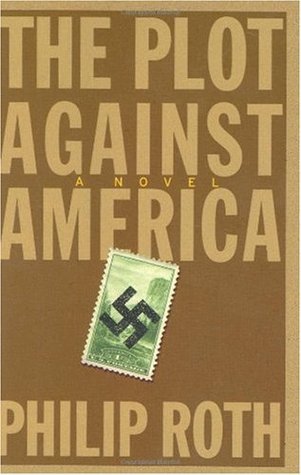
The Plot Against America

The Year of Magical Thinking
